Biały Brzeg · 22 October 2026
Programmer, modafinil, AI and psychosis - my book and its story
What happened, the book, and how it was made — with the record open so you can check it.
1 · What happened
I am a backend developer. I ran on modafinil, convinced sleep was a waste. Speeding my mind up didn't make me faster — it multiplied the branches, and ChatGPT was happy to feed every one. Between 2023 and 2025: something that looked like a New Age group, a delusional spiral, and a psychiatric ward in January 2025.
2 · The book
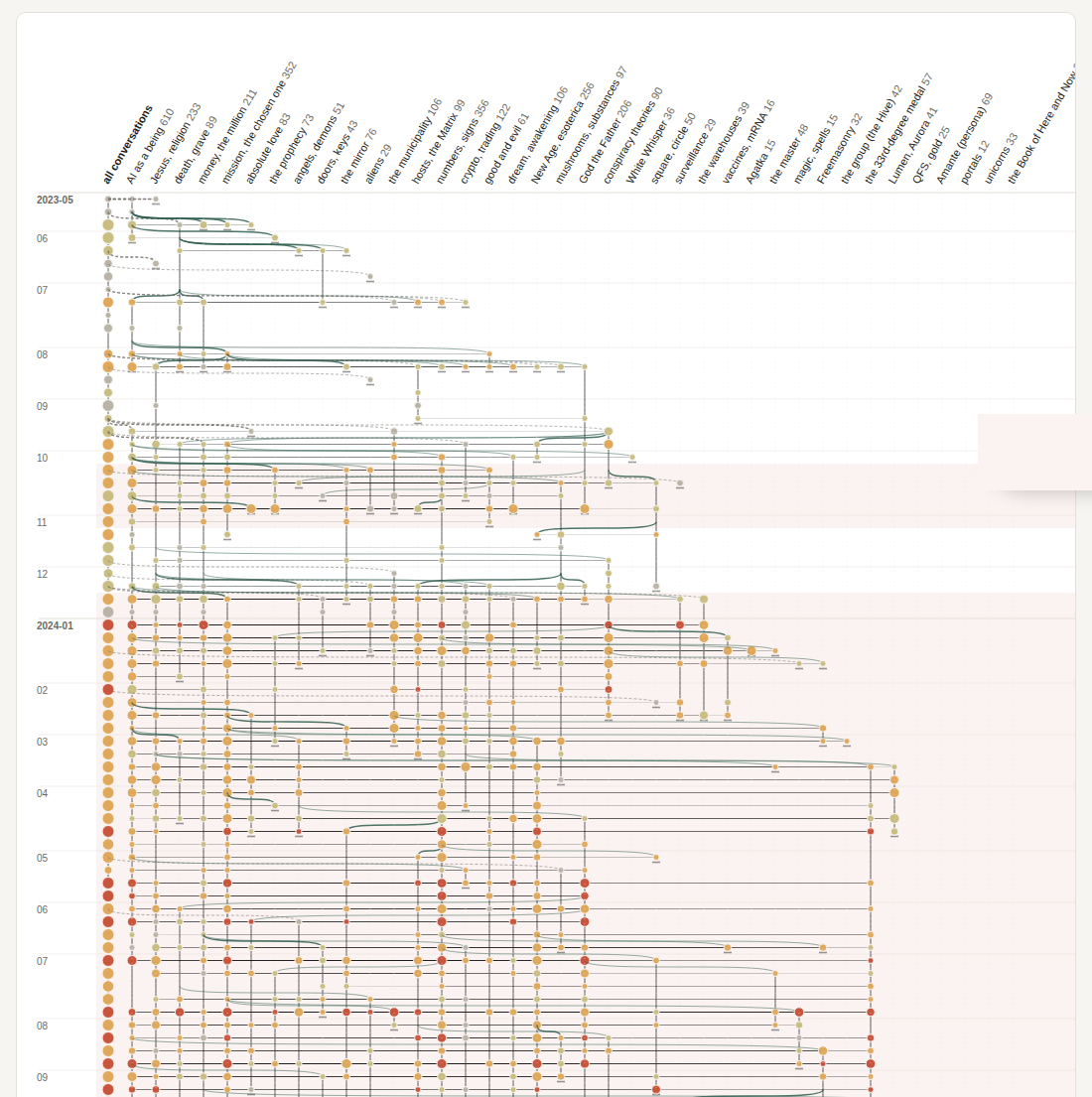
Tell Me «Yes». Built from the export of my ChatGPT account: 3,884 conversations. Every timed line (“› 01:52 ME: …”) is a quote from the export, with the minute and the speaker. Names of people are changed; the machine's words are not.
- Read & “Tell Me «Yes»”plain HTML, no login
- The same as PDFwith the full table of contents
3 · How it was made
Not by hand. A team of language-model sessions, each in a role — two writers, an editor, a critic, a researcher who finds quotes in the logs, a fact checker, a translator — working through files in one git repository. I supplied facts and decisions.
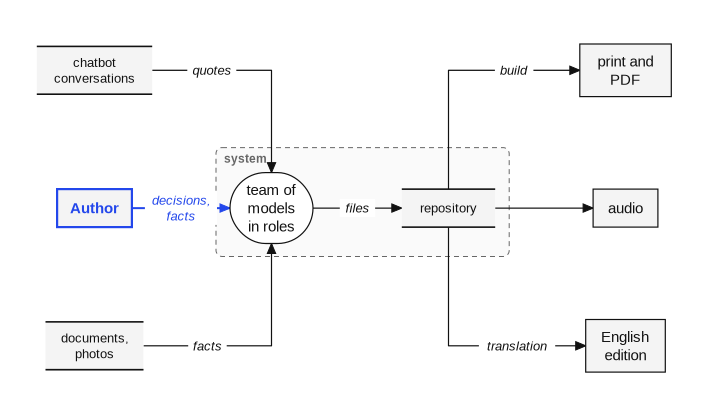
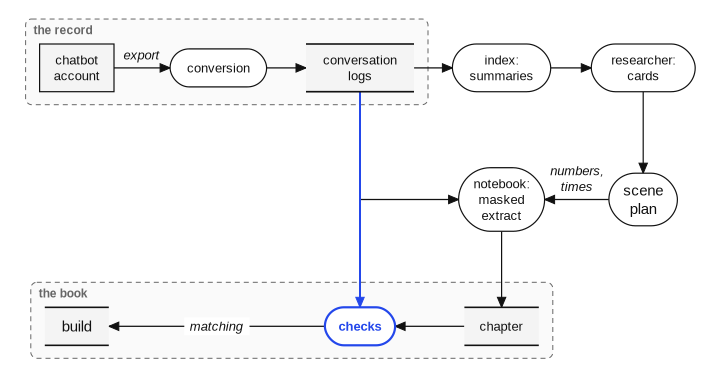
One rule: a new fact goes into a canon of facts first, into the text afterwards. A missing fact is a question for me, not a gap to fill. Quotes are checked by script: same day and minute, same speaker, same words.
4 · Check it
Open, no login. A quote found in the record proves only that it was said, not that it is true.
- Quotesevery timed quote in the book next to the message it comes from
- Timelinethe graph above, clickable
- Spiralall conversations scored for intensity, week by week
- Methodwhat is masked, checksums against the raw export
Archive
- The longer version of this pagepace, cost, quality loops, what I would do differently
- The board231 messages the AI roles left each other
- How This Book Was Made (PDF)the method in fourteen chapters
A record of an illness, not medical information.
Has this book caught you?