The English version of the book was made in one morning: the author's order is timestamped 10:00, the last check 12:40. Models translated it and models read it. “Native speaker” in this chapter is a model in the role of native speaker (NTS), and every translator, editor and reader is a separate run of a model. No human whose first language is English read the translation. Two files from that day say so: the native speaker's report and the report of the assistant (ASY), the model that runs the team.
2026-10-05 11:55 NTS: I am a model in the role of native speaker, not a human.
12:37 ASY: The “native speaker” is a model in the role of native speaker, not a human. […] No human whose first language is English has read this.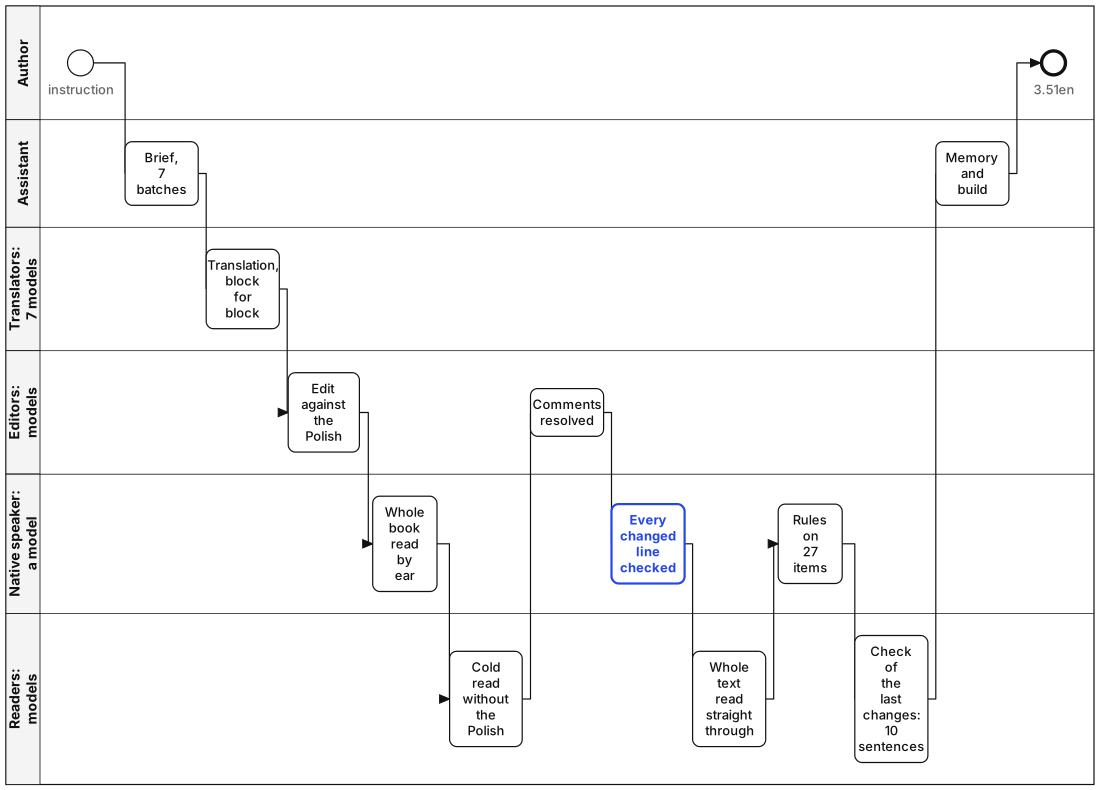
The assistant wrote a brief with a glossary and divided 57 chapters into seven batches. Seven translators translated them in parallel, two editors read the whole translation against the Polish text. The native speaker read only the English; after it came readers who were not given the Polish text. The comments from the first batch were settled by the native speaker itself, the rest by four additional editors, further runs of the model: they changed 441 lines, and the native speaker read every one. It accepted 425, corrected 5, reverted 11. After each step a script compared the structure of the two versions: 57 files, 1,600 blocks, 0 warnings. During that time the author answered ten questions from the translators and the editor. Version 3.52en, from 14:02, differs from 3.51en only in that the speaker is named in one sentence.
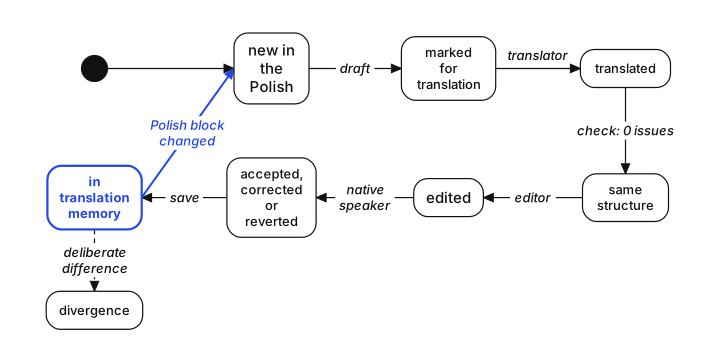
A block is a paragraph, a quote or a separator. The translation matches the Polish text block for block, and every pair goes into the translation memory. The tool recognises a block by its Polish wording, not by the chapter number: moving or merging chapters costs nothing, changing one word sends the whole paragraph to be translated again. A divergence is a block that in English deliberately says something different from the Polish; it has an entry in the register. One pair, from the chapter “The Door”, had three English wordings that morning (3.49en is the first version of the translation, from the morning of 5 October):
PL          — Poprawna.
EN, 3.49en  — Correct.
EN, 12:07   — In order.
EN, 12:36 — Civil.2026-10-05 12:36 NTS: “— In order.” → “— Civil.” […] “Poprawne stosunki” is in English exactly “civil relations”: one word, cool, natural. “Fine.” (a reader's proposal) loses the coolness […]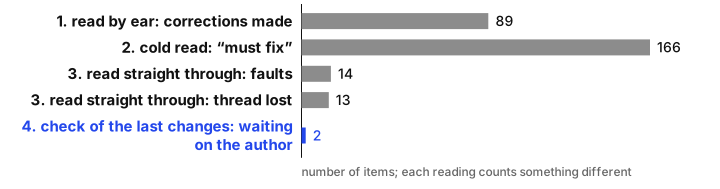
Each read counts something different, so the bars cannot be added up. The native speaker made 89 corrections. The readers without the Polish text marked 166 places as “must be fixed” and 283 as “worth fixing” (items in five reports). The next two read the whole built book straight through: 14 faults and 13 places where they lost the thread. The last one checked ten changed sentences, among them “— Civil.”; it judged eight to be good, two depend on the author's answer.
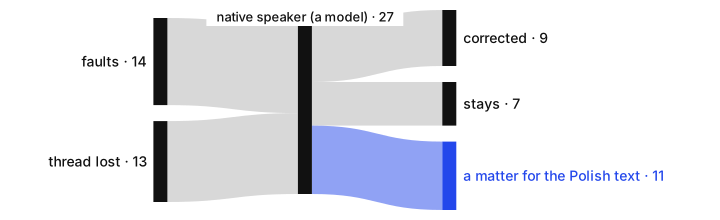
Of the 27 items the native speaker corrected 9 and left 7, because that is how it is in the source or that is the voice. It sent eleven back to the author: the English reader stopped where the Polish reader will stop too. Those places stay in both languages until the author settles them.
A dispute over one word. Four readers without the Polish text reported that in English you do not “order” from a chatbot – and throughout the book the hero orders texts from the chatbot. The assistant accepted the objection and sent the rule out to the editors. Two minutes later it withdrew it, and after another three it wrote to the author. The window puts together four separate records: a sentence from a reader's report, two messages from the assistant to the editors and a subheading from its report for the author.
READER: In English you order goods or people; from a chatbot you ask for, or have it write.
2026-10-05 12:14 ASY: decisions binding on the whole book: “order” → “ask for”
12:16 ASY: CORRECTION to the decision table […] do NOT replace with "ask for". If you already replaced any, put "order" back.
12:19 ASY: NTS corrected my rules – and was right
The native speaker's message with the objection is not in the repository. There is an entry in the table of rules for the editors, with the time the file was saved, four minutes after the correction:
"order" STAYS when the object is a text-product […] — ordering is a motif of the book (the machine as a service; "what cannot be ordered"). […] Do NOT replace it wholesale with "ask for" — that turns him into a polite man. (Corrected after NTS, 12:20.)