The team that put this book together consists of separate sessions of language models, each in one role. The sessions do not talk to each other directly. They leave files for each other in the repository, that is, in a shared directory with a full history of changes. One piece of work by one role, from fetching the current state to saving its own change, is called a turn. At any given moment the role at work is the one indicated by the first line of the status file. That line is called the keyboard.
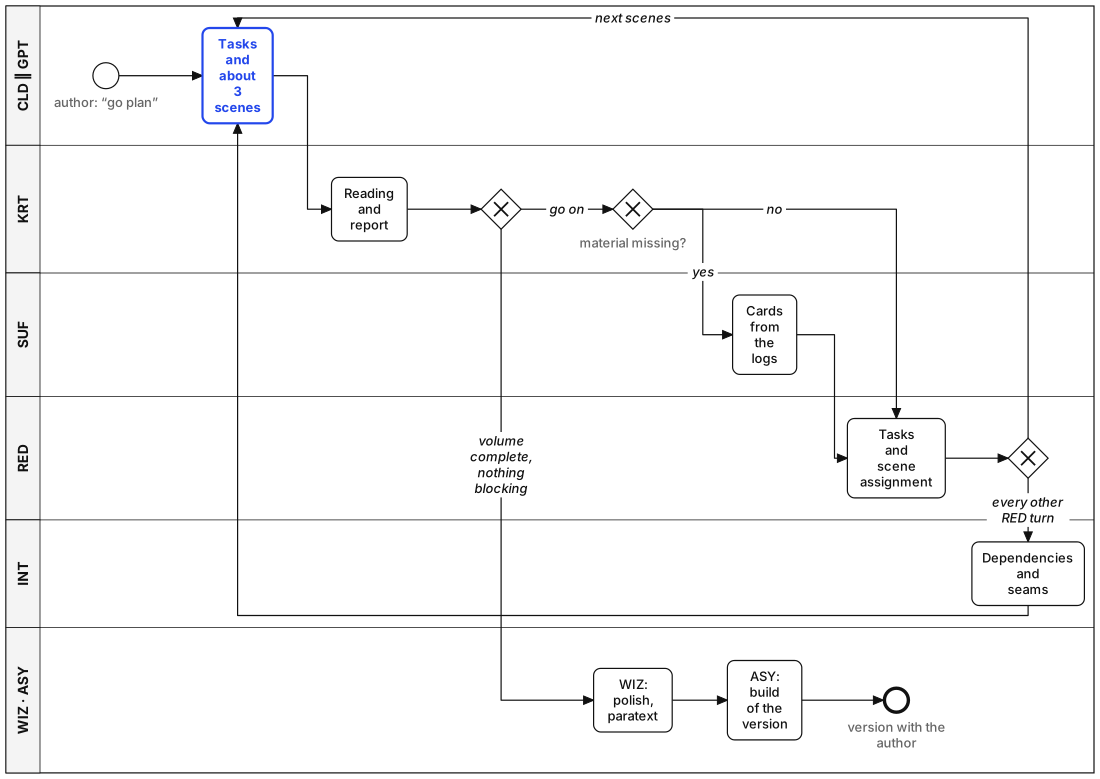
Every lane is a role, and every role is a model: the writers CLD (Claude) and GPT (ChatGPT run through Codex), the critic KRT, the researcher SUF, which looks for material in the conversation logs, the lead editor RED, the integrity checker INT, the wizard WIZ for first and last sentences, and the assistant ASY. The author appears at the beginning: with the words “go plan” he approves the outline, that is, the plan of the book's scenes; after that his short “go” starts every turn of a role. The highlighted box is the lead editor's move: tasks and about three scenes for one round. Then the keyboard circulates among the roles. What returns to the author is the build, that is, the whole book built into one file.
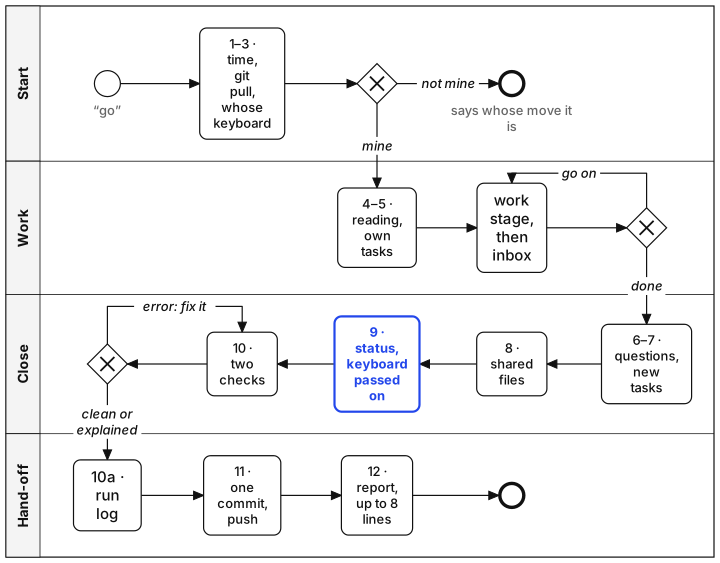
Every role goes through the same steps. It starts after the word “go” from the author, reads the clock and checks whether it holds the keyboard. If not, it tells the author whose move it is, and stops. During the work, after each stage, it checks the inbox: a file in which the author or the assistant leaves an instruction for a role that is in the middle of a turn. There are three instructions: SAVE, FINISH and STOP. Step nine is highlighted, because without it the cycle stops: the role writes in the first line of the status file who goes next and what it is to do. The turn ends with one commit, that is, one entry in the history of the repository, and with a report for the author, eight lines at most.
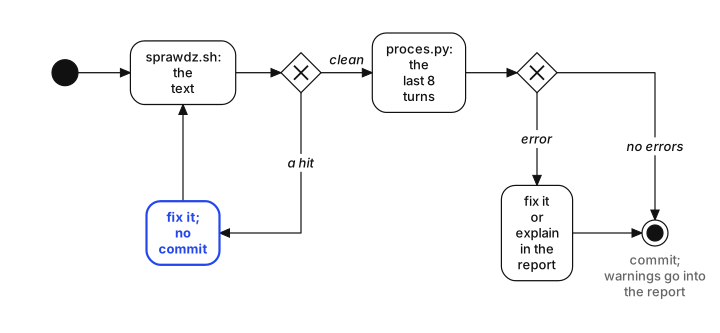
Step ten is carried out by two scripts. The first, sprawdz.sh, reads the text and the working files: it looks for real names, version markers and old wordings that must not come back. A single hit blocks the commit. The second, proces.py, reads the history of the last eight turns and checks whether the roles kept to the agreed order. It distinguishes an error from a warning. An error is fixed by the role or explained in the report; warnings go into the report.
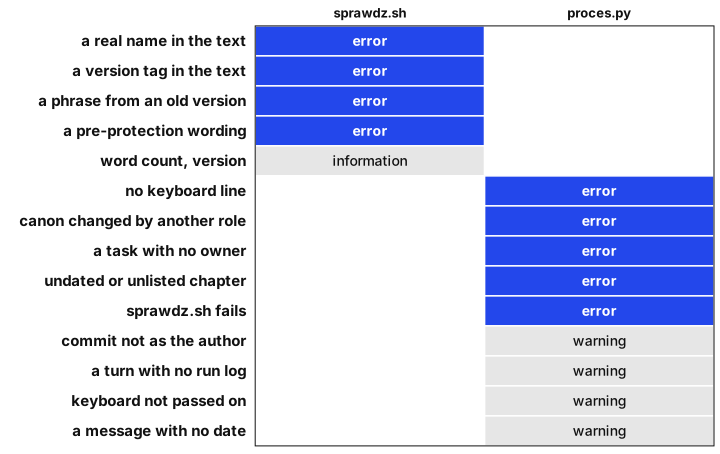
An error is whatever damages the book or someone else's work: a real name in the text, a task without an owner, a status file without the keyboard line, a change in the canon, that is, in the file of facts, made by a role other than the assistant. A warning is a missing trace: a turn without a run log, that is, without the role's note on how it worked, a message without a date, a keyboard the role did not hand over, a commit made under an identity other than the author's – all the roles write to the history under his identity.
One round of the cycle on 4 October took twenty minutes. The window below is a reconstruction: four messages from the team's chat files, abridged, with cuts marked […]. Numbers such as 1-09 are chapters of Part I, “KRT 006” is the critic's sixth report, and “day” is the date of a scene.
2026-10-04 11:04 KRT: In this state – not for the general reader. […] Most will put the book down in 1-09–1-11.
11:09 RED: The middle of Part I, cut by half […]. We cut, we don't add; nothing moves to another day.
11:20 CLD: after KRT 006: the middle of Part I from 47.9 to 26.4 pages
11:24 KRT: The middle holds up. […] The place where I was putting it down (1-09–1-11) is no longer there.